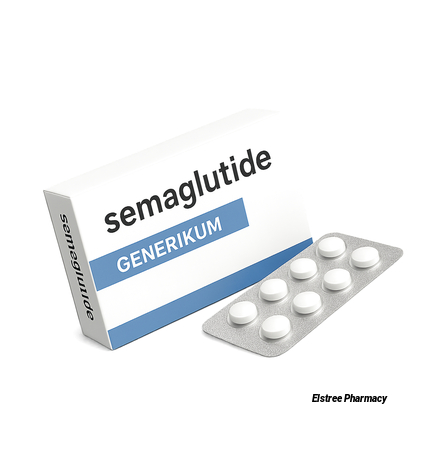
Semaglutide is classified as a Prescription Only Medicine (POM) in the United Kingdom. This means that it cannot legally be supplied without a valid prescription issued by a qualified healthcare professional. However, some online pharmacies may advertise semaglutide for sale without prescription, which can pose legal and safety risks. Elstree Pharmacy only supplies semaglutide on receipt of a valid prescription, ensuring you obtain an authentic product and professional guidance on dosing and monitoring.
Semaglutide is a synthetic analogue of the human incretin hormone glucagon-like peptide-1 (GLP-1). It stimulates insulin secretion, reduces glucagon levels, delays gastric emptying and promotes satiety.
Semaglutide binds to the GLP-1 receptor on pancreatic β-cells, enhancing glucose-dependent insulin release. It also acts on GLP-1 receptors in the brain to suppress appetite and in the gastrointestinal tract to slow gastric transit time.
Following subcutaneous injection, semaglutide has a prolonged half-life of around one week, allowing for once-weekly dosing. It is metabolised by general proteolytic pathways, without significant cytochrome P450 involvement, and is excreted via renal and biliary routes.
Semaglutide is a peptide and would be broken down by stomach enzymes if taken orally. The injectable formulation ensures bioavailability and sustained plasma levels.
An oral tablet formulation of semaglutide exists but requires specific absorption enhancers and strict administration conditions. It remains prescription-only and is not interchangeable with the injectable form without professional guidance.
GLP-1 receptor agonists mimic the incretin hormone GLP-1, which regulates glucose homeostasis. They are widely used in type 2 diabetes and increasingly for weight management under specialist supervision.
Drugs similar to semaglutide include exenatide, liraglutide, dulaglutide and lixisenatide. Each agent differs in dosing frequency, molecular structure and clinical profile.
GLP-1 receptor agonists have demonstrated cardiovascular benefits, including reduced risk of major adverse cardiac events in patients with established cardiovascular disease.
Some GLP-1 agonists are daily injections (liraglutide), whereas others are once-weekly (semaglutide, dulaglutide). Oral semaglutide is the only approved oral option but requires fasting administration and specific timing.
Semaglutide is indicated as an adjunct to diet and exercise to improve glycaemic control in adults with type 2 diabetes. It can be used alone or in combination with other antidiabetic agents.
Under specialist guidance, semaglutide is licensed for chronic weight management in adults with BMI ≥30 kg/m² or ≥27 kg/m² with weight-related comorbidities. It complements lifestyle intervention by reducing energy intake.
In patients with type 2 diabetes and established cardiovascular disease, semaglutide has shown a reduction in major adverse cardiovascular events.
Some practitioners may prescribe semaglutide off-label for conditions such as non-alcoholic fatty liver disease (NAFLD). Off-label use should be guided by a specialist and requires careful monitoring.
Prices vary by brand, generic status, pack size, strength and retailer. The table below provides example price ranges for guidance. For current offers, contact Elstree Pharmacy or check our online price list.
| Product | Strength | Formulation | Approximate Price | Status | Note |
|---|---|---|---|---|---|
| Ozempic | 0.25 mg, 0.5 mg, 1 mg pens | Pre-filled injector | £50–£100 per pen | Prescription Only | Brand name |
| Wegovy | 0.25 mg–2.4 mg | Once-weekly injection | £75–£150 per pen | Prescription Only | Weight management label |
| Generic semaglutide | 0.5 mg, 1 mg | Vial for reconstitution | £30–£60 per vial | Prescription Only | Ask Elstree Pharmacy for cheapest options |
Prices reflect manufacturer, brand premium, regulatory status, pack size, pharmacy service fees and supply chain costs. Cheaper generic semaglutide offers clinically equivalent dosing at a lower price.
Semaglutide is available in multiple strengths for induction and maintenance: from 0.25 mg weekly up to 2.4 mg weekly for weight management. Dosage titration is essential to optimise efficacy and tolerability.
Pre-filled pens, multi-dose vials and disposable injectors are available. Each formulation includes detailed user instructions for safe subcutaneous administration.
Pack sizes vary from single pen packs to multi-pen blister packs. The choice depends on prescription duration, dosing schedule and patient preference.
Generic semaglutide meets the same regulatory standards for quality, safety and efficacy as branded products. Differences lie in device design, packaging and cost.
| Feature | Why it matters |
|---|---|
| Active ingredient | Semaglutide peptide |
| Strength | Determines weekly dose |
| Device type | Ease of use and dosing accuracy |
| Pack size | Influences prescription and refill frequency |
| Price | Affects affordability and access |
By enhancing insulin release and reducing glucagon, semaglutide lowers fasting and postprandial glucose levels. It also supports modest weight loss, which further improves glycaemic control.
Semaglutide acts centrally to decrease appetite, increase satiety and reduce caloric intake. It also slows gastric emptying and may alter reward pathways related to food.
Trials show average weight loss of 5–15% body weight over 68 weeks at 2.4 mg weekly. HbA1c reductions of 1–1.8% have been reported at 1 mg weekly doses in type 2 diabetes.
Therapy starts at 0.25 mg weekly for four weeks, then increases to 0.5 mg, 1 mg and up to 2.4 mg if indicated. Slow titration minimises gastrointestinal side effects.
Blood glucose, weight, renal function and side effects should be monitored periodically. Dose adjustments may be required based on response and tolerability.
Semaglutide is POM in the UK. It can only be supplied following a valid prescription. Community pharmacists must verify prescriptions and counsel patients on safe use.
GPs, hospital specialists (endocrinologists, diabetologists) and other independent prescribers with relevant expertise may issue semaglutide prescriptions.
The MHRA approves semaglutide products and monitors safety through pharmacovigilance reporting. Any suspected adverse reactions should be reported via the Yellow Card scheme.
Personal import of semaglutide without a UK prescription is legally complex. Online pharmacies must be MHRA-registered and require valid prescriptions to comply with UK law.
Drugs like empagliflozin and dapagliflozin reduce blood glucose via renal glucose excretion and may aid weight loss and cardiovascular protection.
Insulin therapy remains a mainstay for advanced type 2 diabetes but carries risk of hypoglycaemia and weight gain.
Lifestyle interventions—including diet, exercise and behavioural support—remain foundational for glycaemic control and weight management.
Semaglutide offers once-weekly dosing and greater weight loss efficacy compared to exenatide and liraglutide. Its half-life supports sustained receptor activation.
All GLP-1 agonists share gastrointestinal side effects. Semaglutide’s slow titration schedule can help mitigate nausea and vomiting.
Semaglutide and liraglutide have robust cardiovascular outcome trial data, demonstrating reduced risk of major adverse events.
| Feature | Semaglutide | Liraglutide | Exenatide |
|---|---|---|---|
| Dosing frequency | Once weekly | Once daily | Twice daily/weekly |
| Weight loss | Up to 15% | Up to 8% | Up to 4% |
| CV benefit | Proven | Proven | Less data |
| GI tolerability | Moderate | Moderate | Higher nausea |
Generic semaglutide can be cheaper than branded counterparts. Device type and service fees also influence final price.
Inject semaglutide on the same day each week, at any time of day, with or without meals. Keep a reminder to maintain adherence.
Rotate injection sites between abdomen, thigh and upper arm. Use a clean, dry skin area and dispose of needles in a sharps bin.
A balanced diet with controlled carbohydrate intake maximises glycaemic benefits. Pair semaglutide therapy with nutritional advice to optimise weight loss.
Maintain adequate fluid intake, especially during dose escalation when gastrointestinal side effects may occur.
Regular exercise enhances insulin sensitivity and supports weight management. Aim for at least 150 minutes of moderate exercise per week, as tolerated.
Nausea, vomiting, diarrhoea, constipation and abdominal pain are the most frequently reported. They often diminish over time with dose titration.
Reports of acute pancreatitis, gallbladder disease and hypersensitivity reactions exist. Any severe or persistent pain warrants immediate medical assessment.
Starting at a low dose and gradual escalation can improve tolerability. Small, frequent meals and avoiding fatty foods may help reduce nausea.
| System | Possible reactions |
|---|---|
| GI | Nausea, vomiting, dyspepsia, constipation, diarrhoea |
| Metabolic | Hypoglycaemia when combined with insulin or sulfonylureas |
| Endocrine | Thyroid C-cell hyperplasia in animal studies (human relevance unclear) |
| Skin | Injection site reactions, rash |
| Allergy | Rare anaphylaxis, erythema |
Long-term use requires monitoring of pancreatic health, gallbladder function and thyroid status. Risk–benefit assessment should be ongoing.
Delayed gastric emptying may affect absorption of concomitant oral medications. Regular review of drug regimens is advised.
Weight loss and potential nutrient malabsorption may impact bone density. Consider bone health monitoring in high-risk individuals.
Continued therapy sustains glycaemic control, weight loss and cardiovascular benefits seen in trial extension studies.
Semaglutide may delay gastric emptying and thus affect the absorption of oral medications. Monitor drugs with a narrow therapeutic index such as warfarin and digoxin.
When used with insulin secretagogues or insulin, the risk of low blood sugar increases. Dose adjustments and blood glucose monitoring are essential.
Semaglutide is not recommended during pregnancy or lactation due to potential risks to the fetus and infant. Effective contraception is advised for women of childbearing potential.
No dose adjustment is required in mild-to-moderate renal or hepatic impairment, but clinical monitoring is recommended. Severe cases should be managed with specialist input.
A generic semaglutide product contains the same active peptide, dosage and pharmacokinetic profile as the reference product but may differ in device design and excipients.
Branded and generic products can have distinct patient information leaflets reflecting device instructions, excipient profiles and manufacturer-specific details.
Refrigerate unopened pens at 2–8°C. Once in use, pens can be kept at room temperature (below 30°C) for up to 6 weeks, away from direct heat or light.
Only purchase from MHRA-registered pharmacies. Check the product packaging, batch number and use valid prescription channels to avoid counterfeit medicines.
Refer to the electronic Medicines Compendium (eMC), MHRA guidance documents or accredited healthcare professional advice. Always keep product leaflets for reference.
This page provides general information by Elstree Pharmacy (The Corner Shop B, High Street, Elstree, WD6 3BY). Always consult your GP or pharmacy team for personalised advice and before starting or changing any medication.