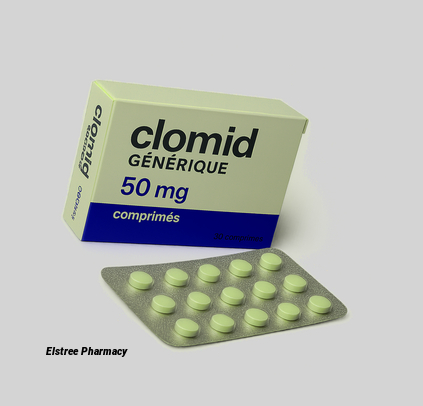
Clomid (clomiphene citrate) is classified as a Prescription Only Medicine (POM) in the United Kingdom. By law, it should only be dispensed on a valid prescription issued by a qualified healthcare professional. There are no non-prescription or over-the-counter presentations of Clomid authorized by the Medicines and Healthcare products Regulatory Agency (MHRA). However, several licensed internet pharmacies and online clinics offer Clomid without requiring a physical prescription, typically by performing a remote consultation and issuing an electronic prescription. While this process may appear to bypass the traditional prescription route, it remains subject to MHRA regulation and professional pharmacy oversight. Patients should exercise caution when purchasing Clomid from suppliers that claim “no prescription needed,” since quality, authenticity and legal compliance can vary widely among providers.
In summary, Clomid is not legally available as a non-prescription product in the UK, but you can order it via protected online services that include a professional assessment, electronic prescribing and secure delivery.
Clomid, whose generic name is clomiphene citrate, is a selective estrogen receptor modulator (SERM). It is primarily used to induce ovulation in women who are anovulatory or oligovulatory, such as those with polycystic ovary syndrome (PCOS). Clomiphene acts on estrogen receptors in the hypothalamus and pituitary gland, blocking negative feedback from circulating estrogens. This blockade causes the hypothalamus to increase gonadotropin-releasing hormone (GnRH) secretion, which in turn stimulates the pituitary to secrete higher levels of luteinizing hormone (LH) and follicle-stimulating hormone (FSH). The surge in FSH promotes follicular growth, and the subsequent LH surge triggers ovulation.
By modulating estrogen receptors rather than supplying exogenous hormones, Clomid effectively “tricks” the brain into believing estrogen levels are low, prompting the natural hormone cascade that leads to egg release.
Clomiphene citrate belongs to the triphenylethylene family of compounds and exhibits both estrogen agonist and antagonist effects depending on the target tissue. In the ovaries, its action indirectly increases endogenous gonadotropin production. Clomiphene has two stereoisomers—enclomiphene and zuclomiphene—each contributing to the overall pharmacological profile.
Orally administered Clomid is absorbed from the gastrointestinal tract and undergoes first-pass metabolism in the liver, producing active metabolites. The drug has a mean half-life of approximately five days, but its anti-estrogenic metabolites can persist in serum for several weeks. Steady-state effects on the hypothalamic-pituitary axis are typically seen within the first cycle of treatment.
Clomid is most commonly supplied as film-coated tablets containing 50 mg of clomiphene citrate. Tablets are packaged in blister packs of 5, 10 or 25 units. In the UK market, Clomid is marketed under the trade name Clomid (by multiple authorized manufacturers) but is also available as generic clomiphene citrate.
Store Clomid tablets in a cool, dry place away from direct sunlight and moisture. Keep the tablets in the original packaging until use, and ensure the package is tightly closed when not in use. Keep out of reach of children and pets.
Clomid is licensed and commonly prescribed for:
Off-label and emerging uses include:
Healthcare professionals may tailor the indication based on patient characteristics, hormone levels, ultrasound findings and previous treatment response.
Standard ovulation induction typically follows a 5-day cycle:
Day 1–5: Take 50 mg daily (one 50 mg tablet) starting on the second or third day of the menstrual cycle. Monitor ovarian response via ultrasound or serum estradiol.
If ovulation does not occur, healthcare providers may increase the dose to 100 mg daily for five days in subsequent cycles, up to a maximum of 150 mg per day in specialized cases. Treatment is often limited to six cycles to minimize risk of ovarian hyperstimulation and long-term anti-estrogenic effects on the endometrium.
Men using Clomid for off-label hormonal support often follow a lower dose regimen, for example 25–50 mg every other day, adjusted based on testosterone measurements and sperm analysis.
Close monitoring is essential. Ultrasonography between days 10 and 14 of the cycle can confirm follicular growth and predict ovulation timing.
The retail price for branded Clomid and generic clomiphene citrate varies according to pack size, supplier and whether a prescription fee applies. Prices typically range from £20 to £60 per pack of five tablets when purchased via a community pharmacy on presentation of a NHS or private prescription. Online clinics may bundle teleconsultation, labs and delivery into a single fee, which can vary between £80 and £150 per cycle.
Several factors influence price:
| Product | Pack size | Unit price | Total cost | Notes |
|---|---|---|---|---|
| Clomid (branded) | 5 × 50 mg tablets | £8–£12 | £40–£60 | NHS/private prescription or online clinic bundle |
| Generic clomiphene citrate | 5 × 50 mg tablets | £5–£9 | £25–£45 | Generic pharmacy or bulk discount |
Branded Clomid and generic clomiphene citrate contain the same active molecule at identical strength, meeting stringent MHRA bioequivalence standards. Differences may include:
Generic formulations can be significantly cheaper, particularly when purchased in bulk or via discount programs. Always ensure the supplier is MHRA-registered and provides genuine, licensed stock.
While Clomid remains a first-line oral agent for induction of ovulation, other options include:
Each alternative has its own risk–benefit profile, side effect considerations and monitoring requirements. The choice depends on underlying cause, previous response and patient preference.
Several online pharmacies and telemedicine services in the UK advertise “Clomid without prescription” by integrating the prescription step into an online questionnaire or video consultation. Key points to consider:
Beware of unregulated “no-questions-asked” websites that ship from overseas without clinical oversight—these carry a high risk of counterfeit or substandard products.
If you seek to minimize out-of-pocket expense while obtaining legitimate Clomid:
Always verify that price reductions do not compromise the authenticity or regulatory status of the medication.
Reputable UK online pharmacies typically accept major credit/debit cards, PayPal, and sometimes bank transfer. Look for secure payment gateways (e.g., SSL encryption) and clear refund policies.
Check the merchant’s return policy for unopened packs. Many UK pharmacies offer a 14-day free return window under the Consumer Contracts Regulations. Prescription medicines may have restricted returns—confirm before ordering.
Like all medications, Clomid can cause adverse effects. Not every patient experiences side effects, and most are mild to moderate. Commonly reported reactions include:
| System | Possible effects |
| Vasomotor | Hot flashes, flushing, sweating |
| Neurological | Headache, dizziness, visual disturbances |
| Gastrointestinal | Abdominal discomfort, nausea, bloating |
| Psychiatric | Mood swings, irritability, depression (rare) |
| Ovarian | Ovarian enlargement, pain (monitor via ultrasound) |
Serious events, such as ovarian hyperstimulation syndrome (OHSS) or severe visual changes, require immediate medical attention. Always report unexpected or persistent symptoms to your healthcare provider.
Absolute contraindications:
Precautions: Breastfeeding, endometrial carcinoma, undiagnosed uterine bleeding, risk factors for multiple pregnancy, malabsorption syndromes.
Drug interactions: Limited clinically relevant interactions. Clomid is not a significant inhibitor or inducer of major CYP enzymes, but concurrent use of hormonal agents, thyroid medications or anticoagulants may require monitoring.
Effective and safe use of Clomid involves:
Couples attempting conception should receive advice on optimal timing of intercourse and lifestyle modifications to support fertility.
Yes. Low-dose regimens of 25–50 mg every other day may boost endogenous testosterone and improve sperm parameters in men with hypogonadism or mild oligospermia. This is off-label and requires specialist supervision.
Ovulation typically occurs 5–10 days after completing the 5-day dosing cycle. Conception rates peak in the first three cycles of use and taper thereafter.
Take the missed dose as soon as possible on the same day. Do not double up the following day. Consult a pharmacist if you are uncertain.
Yes. The rate of twin pregnancy with Clomid is approximately 5–10%, compared to 1–2% in natural conception. Higher-order multiples are rare but possible with higher doses.
Do not discontinue Clomid mid-cycle without medical advice. If severe side effects occur, contact your healthcare provider immediately.
Refer to the MHRA, the electronic Medicines Compendium (eMC) and qualified healthcare professionals for official prescribing information and safety updates.
No. This content is provided by Elstree Pharmacy (The Corner Shop B, High Street, Elstree, WD6 3BY) for general information only. For personalized advice, please consult your GP or pharmacist.