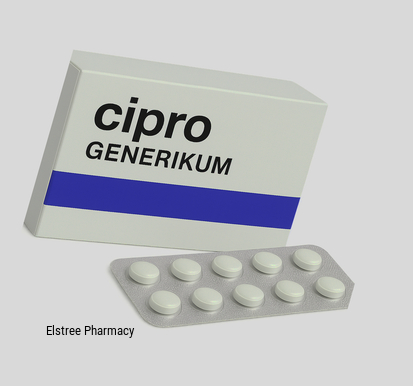
Ciprofloxacin, commonly referred to as Cipro, is primarily classified as a Prescription Only Medicine (POM) in the United Kingdom. This means it cannot be legally supplied unless prescribed by a qualified medical practitioner. However, certain generic or pharmacy-authorised presentations for specific short-course bacterial infections have undergone reclassification trials and pilot schemes. These pilot programs allow trained pharmacists in pilot regions to supply ciprofloxacin under strict conditions without a prescription, following a private consultation. Such availability is limited to particular indications, pack sizes and durations. It is essential for consumers to confirm current legal status and pharmacy participation when seeking to purchase Cipro without a prescription.
While the concept of “buy Cipro online without prescription” may be promoted by some third-party vendors, patients should exercise caution. Unregulated supply channels can carry counterfeit or substandard products. Always verify that the pharmacy is MHRA-registered, check the product licence and consult professional advice before using any antibiotic agent without a formal prescription.
The UK regulates human medicines under three main legal classifications: Prescription Only Medicine (POM), Pharmacy medicine (P), and General Sales List (GSL). Cipro, owing to its status and potential for microbial resistance and serious adverse events, is predominantly a POM.
Pharmacy medicines (P) can be sold without a prescription but only by or under the supervision of a pharmacist. This category typically covers lower-risk products. In contrast, GSL medicines are deemed sufficiently safe for general retail without pharmacy oversight. Antibiotics such as ciprofloxacin do not fit into GSL or standard P categories because of the need for medical evaluation and the risk of promoting antibiotic resistance if misused.
Recent regulatory pilot schemes have investigated targeted reclassification of specific antibiotics for uncomplicated urinary tract infections, allowing pharmacy supply. Nevertheless, these remain pilot programs subject to regional approval, training requirements and robust clinical protocols.
Ciprofloxacin is a broad-spectrum antibiotic belonging to the fluoroquinolone class. It is active against a variety of Gram-negative and some Gram-positive bacteria. Due to its potency, ciprofloxacin is indicated for conditions ranging from urinary tract infections to complicated intra-abdominal infections under medical supervision.
Fluoroquinolones inhibit bacterial DNA gyrase and topoisomerase IV, enzymes crucial for DNA replication. This mechanism results in bactericidal activity—meaning it kills bacteria rather than merely inhibiting growth. Other members of this class include levofloxacin, moxifloxacin and norfloxacin.
The active pharmaceutical ingredient is ciprofloxacin hydrochloride. Generic products must demonstrate bioequivalence to brand-name references, ensuring they deliver the same amount of active substance within the same timeframe. Excipients, coatings and tablet design may vary between manufacturers, potentially affecting tolerability and patient preference.
Ciprofloxacin formulations include immediate-release tablets, extended-release tablets and intravenous solutions. Immediate-release tablets release the active drug rapidly, suitable for most indications, while extended-release forms maintain plasma levels longer, reducing dosing frequency. Intravenous formulations are reserved for severe infections under hospital care.
Unlike antacids that neutralise stomach acid or analgesics that relieve pain, ciprofloxacin directly targets bacterial replication. Its use requires careful diagnosis of bacterial etiology, dosing adjustments for renal function, and monitoring for side effects and drug interactions. These requirements preclude unsupervised over-the-counter status under normal conditions.
Ciprofloxacin binds to bacterial DNA gyrase and topoisomerase IV, preventing the supercoiling and uncoiling of bacterial DNA necessary for replication and transcription. This inhibition causes breaks in the bacterial chromosome and leads to cell death. Its broad spectrum includes many Escherichia coli, Klebsiella pneumoniae, Salmonella spp. and Pseudomonas aeruginosa strains.
After oral administration, ciprofloxacin is rapidly absorbed, with peak plasma concentrations achieved within 1–2 hours. Food can delay absorption marginally but does not affect the overall bioavailability significantly. Approximately 40–50% of the dose is excreted unchanged in urine, making dosing adjustments essential in renal impairment.
Ciprofloxacin distributes widely into body tissues, including the prostate, lungs and skin. It crosses the blood–brain barrier to a limited extent and can reach therapeutic concentrations in cerebrospinal fluid under certain conditions. Excellent urinary excretion makes it effective for urinary tract infections.
Ciprofloxacin exhibits concentration-dependent killing: higher serum concentrations result in more rapid bacterial death. This contrasts with time-dependent antibiotics like beta-lactams, where maintaining inhibitory concentrations over time is critical. Clinicians may thus tailor dosing regimens based on pharmacodynamic targets.
Bacteria can develop resistance via mutations in gyrase/topoisomerase genes, efflux pumps, or reduced outer membrane permeability. Appropriate use—correct dose, duration and indication—as guided by susceptibility testing, helps minimize resistance emergence.
Prices vary by strength, pack size, brand versus generic, and pharmacy retailer. At Elstree Pharmacy, generic Cipro immediate-release tablets 250 mg or 500 mg start from as low as £8.99 for a pack of 10 tablets when purchasing without prescription under pilot schemes. Brand-name Cipro (Ciprofloxacin) by established manufacturers may cost between £20 and £35 per similar pack.
Pricing factors include manufacturing costs, market competition, pack size, distribution agreements, promotional discounts and pharmacy pricing strategies. Generic medicines frequently offer the cheapest option due to multiple manufacturers. Bulk-buy promotions or membership schemes can further reduce out-of-pocket expenses.
| Example | Strength | Formulation | Price | Status | Note |
|---|---|---|---|---|---|
| Generic Cipro A | 250 mg | Immediate-release tablets x10 | £8.99 | Pharmacy pilot scheme | Limited regional availability |
| Brand Cipro B | 500 mg | Immediate-release tablets x10 | £22.50 | Prescription only | Prescription required |
Ciprofloxacin immediate-release tablets are typically available in 125 mg, 250 mg, 500 mg and 750 mg strengths. Extended-release tablets commonly come in 500 mg and 1000 mg. Intravenous formulations are provided as 200 mg/100 mL and 400 mg/200 mL solutions for infusion.
Pack size determines the maximum duration of treatment easily accessible. Pharmacy pilot schemes may limit supply to a 3–5 day pack for uncomplicated infections. Prescription supplies can extend to 7–14 day courses or longer, depending on clinical indication.
Immediate-release tablets disintegrate rapidly in the stomach, while extended-release tablets maintain plasma levels evenly over 12–24 hours. Certain formulations may contain agents to reduce gastrointestinal discomfort or improve palatability for pediatric suspensions.
Generic ciprofloxacin products must pass regulatory bioequivalence studies, ensuring they perform similarly to reference products in terms of rate and extent of absorption. Inactive ingredients may differ but do not affect antimicrobial potency.
Ciprofloxacin is effective against many UTI pathogens including E. coli, Klebsiella and Proteus species. In pilot pharmacy supply schemes, it may be available without a prescription for simple lower UTIs in women aged 18–65 with typical symptoms.
Acute bacterial prostatitis may be treated with ciprofloxacin under prescription. The drug’s excellent prostatic tissue penetration makes it a preferred agent for certain bacterial prostatitis cases.
Ciprofloxacin treats severe bronchitis, pneumonia and other lung infections, especially when Pseudomonas aeruginosa or other Gram-negative organisms are involved. Hospital-based intravenous administration is common for severe cases.
Combined regimens including ciprofloxacin and metronidazole can address complicated intra-abdominal infections. Such use requires specialist supervision and susceptibility-guided selection.
Ciprofloxacin may cover Gram-negative pathogens in certain skin and soft tissue infections. Its use in osteomyelitis is guided by culture results and often combined with other antibiotics.
As a POM, ciprofloxacin usually requires a prescription from a GP, dentist or authorised prescriber. This classification ensures appropriate diagnosis, dosing, monitoring and follow-up to minimize adverse outcomes and resistance.
Some antibiotic pilot schemes allow pharmacists to supply a limited pack of generic Cipro for uncomplicated UTIs following a structured clinical assessment. Pharmacists must record patient details, counsel on adherence, check for contraindications and report usage data.
Ciprofloxacin is not available as a GSL medicine. Antibiotics with substantial systemic effects are not suitable for unsupervised sale due to safety and public health considerations.
The Medicines and Healthcare products Regulatory Agency (MHRA) is responsible for medicine classification, pilot scheme approval and overall antimicrobial stewardship in the UK. Any move to reclassify antibiotics is subject to stringent scientific evaluation and public consultation.
Levofloxacin and moxifloxacin offer similar mechanisms but differ in spectrum and pharmacokinetics. Their use follows susceptibility profiles and specific clinical indications.
Amoxicillin, co-amoxiclav, cephalosporins and carbapenems provide broad and narrow-spectrum options. These drugs are often first-line for respiratory and skin infections based on local resistance patterns.
Doxycycline and minocycline cover atypical pathogens and some Gram-negative organisms. They are used in respiratory infections, acne and malaria prophylaxis.
Azithromycin and clarithromycin are effective against atypical respiratory pathogens and some Gram-positive bacteria. They offer an alternative in penicillin-allergic patients.
Co-trimoxazole (trimethoprim-sulfamethoxazole) remains a UTI treatment option when resistance rates are low. It can be used where fluoroquinolones are contraindicated.
| Feature | Ciprofloxacin | Amoxicillin | Azithromycin |
| Drug class | Fluoroquinolone | Beta-lactam | Macrolide |
| Mechanism | Inhibits DNA gyrase/topoisomerase | Inhibits cell wall synthesis | Inhibits bacterial protein synthesis |
| Oral bioavailability | 70–80% | 75–90% | 37–52% |
| Common uses | UTIs, GI, respiratory | Respiratory, skin, ear infections | Respiratory, some STIs |
| Resistance concerns | High if misused | Moderate | Increasing macrolide resistance |
Each antibiotic offers distinct advantages and limitations. Choice depends on infection site, pathogen susceptibility, patient allergies, side effect profiles and dosing convenience.
Dairy products, calcium-fortified juices and antacids containing magnesium or aluminium can chelate ciprofloxacin, reducing absorption. Patients should avoid such products within two hours of dosing.
Moderate alcohol intake does not typically interact with ciprofloxacin, but both can cause gastrointestinal upset or dizziness in some individuals. Avoid excessive alcohol to minimize side effects and promote recovery.
Adequate fluid intake facilitates renal elimination of ciprofloxacin and reduces the risk of crystalluria. Patients with renal impairment require dose adjustment and careful monitoring.
Photosensitivity reactions can occur; patients should use sun protection and avoid prolonged exposure during treatment.
Ciprofloxacin can increase the risk of tendonitis and tendon rupture, particularly in elderly patients and those on corticosteroids. Avoid intense physical activity and report any tendon pain promptly.
| System | Examples |
| Gastrointestinal | Nausea, diarrhea, abdominal pain |
| Central nervous | Dizziness, headache, insomnia |
| Musculoskeletal | Tendon pain, arthralgia |
| Dermatological | Photosensitivity rash |
| Cardiac | QT prolongation (rare) |
While most side effects are mild and transient, severe reactions can occur. Report signs of hypersensitivity—such as rash, swelling, breathing difficulties—or tendon-related symptoms immediately.
Prolonged or repeated use of ciprofloxacin can select for resistant bacterial strains, limiting future treatment options. Clinical guidelines generally recommend restricting fluoroquinolone use to indicated cases and ensuring treatment durations align with evidence-based recommendations. Microbial culture and sensitivity testing help guide therapy and minimize unnecessary exposure.
Pharmacists and prescribers should monitor usage patterns, counsel patients on completion of prescribed courses, and discourage premature discontinuation once symptoms improve to prevent relapse and resistance development.
Always disclose all current medications and medical conditions to the pharmacist or prescriber before initiating therapy.
A generic antibiotic contains the same molecular entity as the branded reference product and must demonstrate bioequivalence. Generic Cipro offers a cost-effective alternative without compromising efficacy or safety, under MHRA standards.
Inactive ingredients, tablet coloring, shape and packaging can differ by manufacturer. These variations do not affect therapeutic action but may influence patient preference and tolerability.
Check MHRA licence numbers, look for batch numbers and expiry dates, and purchase only from registered pharmacies. Report suspected counterfeit products to the MHRA.
Refer to the electronic Medicines Compendium (eMC), Summary of Product Characteristics, patient information leaflets and consult Elstree Pharmacy’s qualified pharmacists for tailored advice. This information does not replace professional medical guidance.
Elstree Pharmacy (The Corner Shop B, High Street, Elstree, WD6 3BY) offers private consultations under pilot schemes for eligible Cipro supply. For personalised advice, call +44 2082075925 or visit us during opening hours.